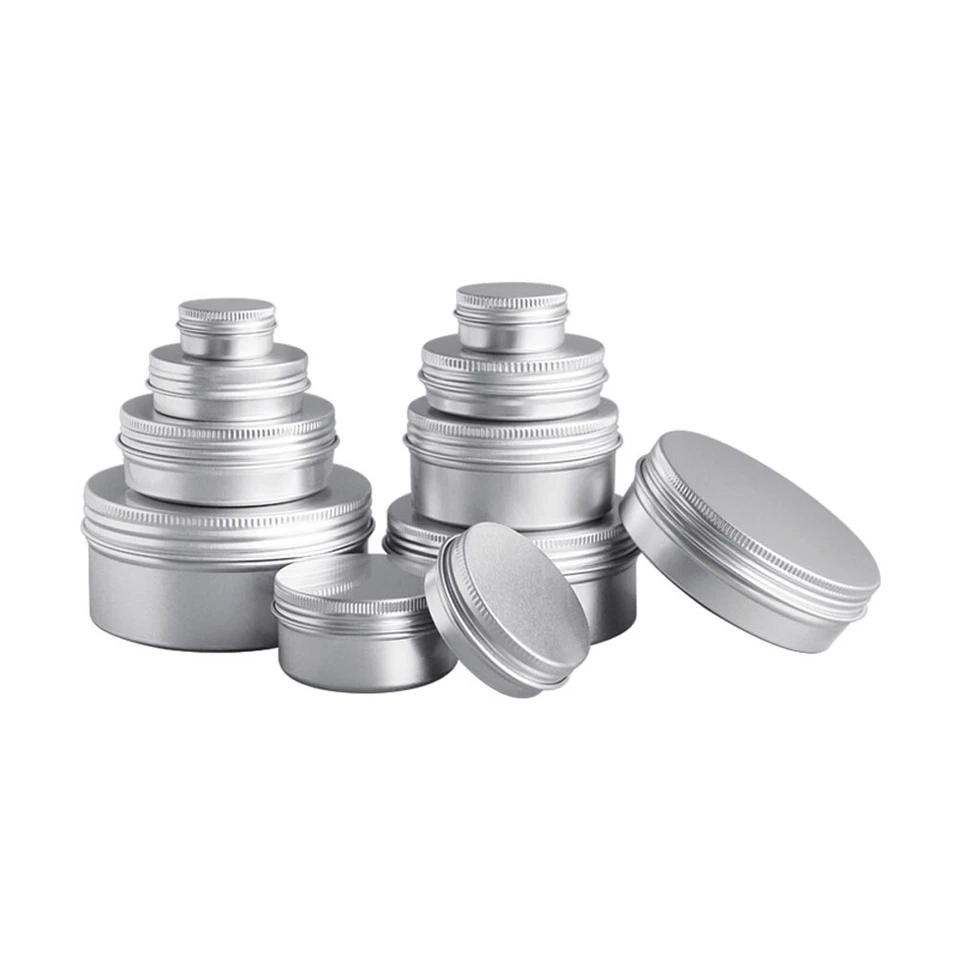
How to Choose an Aluminum Tin for Soap, Salve, and Ointment: Fill Form, Size, and Seal
To choose an aluminum tin for soap, salve, and ointment, start with the fill form, then shortlist by complete-set size and confirm lid fit and finish with a sample of the actual fill: the factory boxes cover 10g–200g in 10 sizes, with a standard MOQ of 5,000 pcs per size, samples usually in 3–7 days, mass production in 15–20 days, and custom mould development usually adding 7–15 days.
To choose an aluminum tin for soap, salve, and ointment, start with the fill form, then shortlist by complete-set size and confirm lid fit and finish with a sample of the actual fill: the factory boxes cover 10g–200g in 10 sizes, with a standard MOQ of 5,000 pcs per size, samples usually in 3–7 days, mass production in 15–20 days, and custom mould development usually adding 7–15 days.
The Three-Step Soap-Salve Tin Check: your quick reference
Named method: Three-Step Soap-Salve Tin Check. Reused in the quick table, the checklist, and the Q&A: step 1, set the fill form; step 2, shortlist by complete-set size; step 3, confirm lid, dispensing, and finish with a sample of the actual fill.
| Fill form | Confirm first | Test with a sample |
|---|---|---|
| Solid soap bar | Bar shape, diameter, and thickness | Whether it lies flat in the tin and is easy to take out |
| Oil-based salve | Salve firmness and how it is taken out | Whether the lid still fits after repeated opening and whether salve reaches the lid rim |
| Thicker ointment | Fill amount and headroom inside the tin | Whether the lid closes when full and whether the lid rim is easy to clean after use |
This table does not hard-map any fill amount to a specific size; sample testing decides.
1. Choosing by weight only, ignoring bar shape and how a salve is taken out
Bars and salves of the same weight do not pack the same way. A square bar, a round bar, and a salve differ in how they go into a tin. Look at fill form and dispensing first, then shortlist by complete-set size; do not choose by the weight number alone.
2. Looking at the lid type only, without testing repeated opening and oil-resistant sealing
Salves and ointments are opened many times a day, and the lid rim can pick up product. Test a sample with the actual salve or ointment, opening and closing repeatedly, to confirm the lid still fits and that the lid rim can be cleaned; do not judge by the lid type name alone.
3. Looking at diameter only, ignoring height and headroom
A tin with the right diameter but too little height will not let a bar lie flat, and an ointment tin filled to the top will not close. Check both diameter and height in the complete-set size, and leave headroom for dispensing and closing; the amount of headroom is set by sample testing.
4. Looking at moisture protection only, without separating scents
Different scented soaps and salves stored together can affect each other's scent. Whether to store them separately, and how a scent performs after the lid is closed, should be confirmed with samples of the actual products. This guide does not claim that an aluminum tin fully blocks scent transfer.
5. Judging surface printing by color only, without testing oil and wear resistance
After salve or ointment contacts the tin body and lid rim, print durability must be confirmed with a sample. Surfaces and printing use only the FAQ-verified list: finishes silver, matte, brushed, polished, and custom color; printing silk screen, laser engraving, offset, and embossing-debossing.
6. Estimating MOQ and lead time like a retail order
The standard MOQ is 5,000 pcs per size, samples usually take 3–7 days, mass production is 15–20 days after sample approval, and custom mould development usually adds 7–15 days (time only, no cost content). Whether a smaller trial order is possible depends on the product and is confirmed in communication.
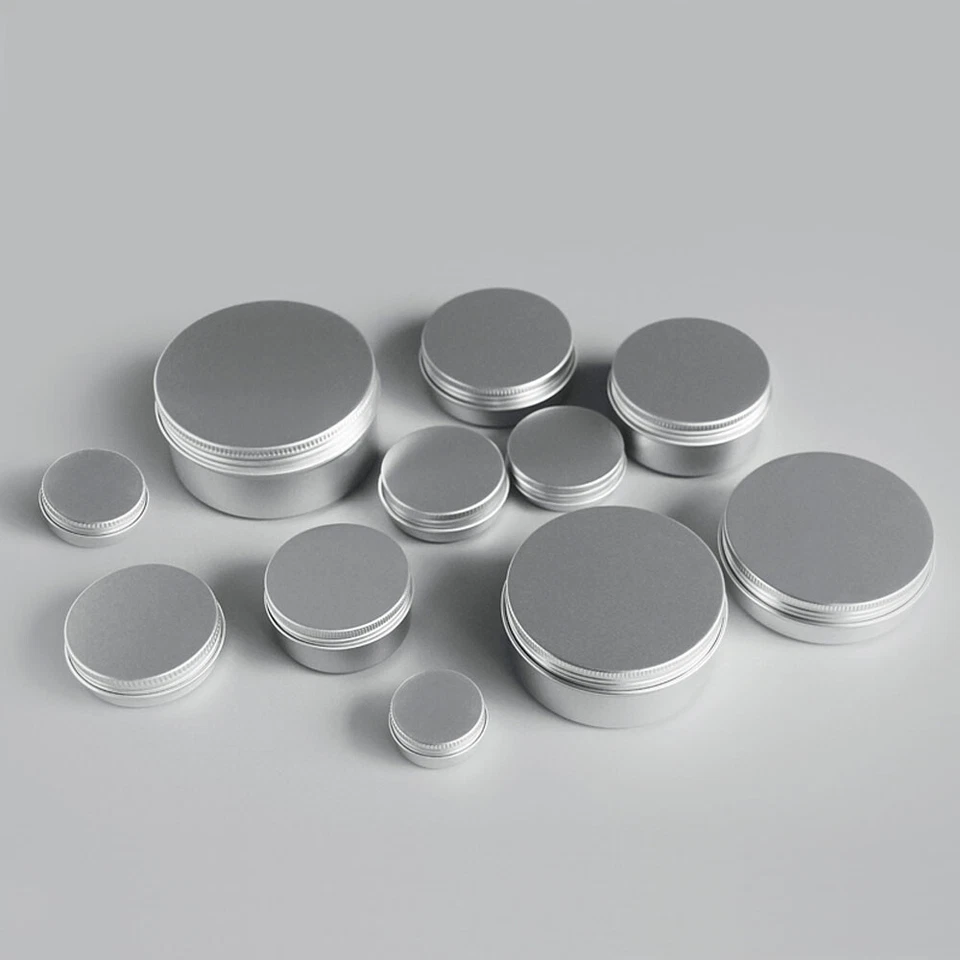
Factory standard aluminum box sizes (product and size only, in mm)
| Product | Size |
|---|---|
| 10g aluminum box | 35 x 18 |
| 15g aluminum box | 38.5 x 19.5 |
| 20g aluminum box | 47 x 20 |
| 30g aluminum box | 52 x 20 |
| 50g aluminum box | 57 x 26.5 |
| 60g aluminum box | 68 x 26 |
| 80g aluminum box | 68 x 35 |
| 100g aluminum box | 83 x 27 |
| 150g aluminum box | 83 x 38 |
| 200g aluminum box | 92 x 44.5 |
No lid-to-box pairing is claimed by similar diameter. Aluminum lids come in 21 sizes; see the aluminum lid size guide.
2026 timeliness
This guide is written from the factory size table and FAQ as of October 2026. Sizes, MOQ, and lead times are subject to the version confirmed in communication if they change.
Method disclosure
This guide contains no cost content, no trade-terms wording, no unverified certificates, grades, wall thicknesses, or standards numbers, and no carton quantities. Salve and ointment are discussed only as a tin-selection method; it does not claim suitability for any regulated drug, and applicability is left blank for buyer communication.
Checklist: use the Three-Step Soap-Salve Tin Check before bulk production
- Fill form is set: bar shape or salve firmness is confirmed.
- Complete-set size is shortlisted: diameter and height are both checked, not weight alone.
- Sample is tested: the actual fill has been tested for repeated opening, dispensing, lid rim, and finish.
- Quantity and timing are confirmed: MOQ, sample, and mass-production timing have been discussed.
Frequently asked questions
What should I look at first for soap, salve, and ointment tins? Fill form first, then complete-set size, then sample confirmation.
What if a soap bar does not fit in the tin? Check the bar's shape, diameter, and thickness against the complete-set sizes, then test with a sample; do not just switch to a tin of a similar weight.
What if the lid no longer fits tightly after repeated opening with a salve? Test a sample with the actual salve, opening and closing repeatedly, to confirm lid fit and how the lid rim is cleaned.
Can soaps and salves of different scents be stored together? Scent performance is judged from samples of the actual products; this guide makes no guarantee, and whether to store them separately is confirmed in communication.
What happens if printing contacts a salve? Print durability is judged from a sample with the actual fill; surfaces and printing use only the FAQ-verified list.
What are the MOQ and lead time? The standard MOQ is 5,000 pcs per size, samples usually take 3–7 days, mass production is 15–20 days after sample approval, and custom mould development usually adds 7–15 days.
Internal links: FAQ https://www.aluminumtin.com/faq, Products https://www.aluminumtin.com/products, Aluminum box size guide https://www.aluminumtin.com/news/aluminum-box-size-guide-10g-200g, Aluminum lid size guide https://www.aluminumtin.com/news/aluminum-lid-size-guide
Frequently asked questions
What should I look at first for soap, salve, and ointment tins?
Fill form first, then complete-set size, then sample confirmation.
What if a soap bar does not fit in the tin?
Check the bar's shape, diameter, and thickness against the complete-set sizes, then test with a sample; do not just switch to a tin of a similar weight.
What if the lid no longer fits tightly after repeated opening with a salve?
Test a sample with the actual salve, opening and closing repeatedly, to confirm lid fit and how the lid rim is cleaned.
Can soaps and salves of different scents be stored together?
Scent performance is judged from samples of the actual products; this guide makes no guarantee, and whether to store them separately is confirmed in communication.
What happens if printing contacts a salve?
Print durability is judged from a sample with the actual fill; surfaces and printing use only the FAQ-verified list.
What are the MOQ and lead time?
The standard MOQ is 5,000 pcs per size, samples usually take 3–7 days, mass production is 15–20 days after sample approval, and custom mould development usually adds 7–15 days.