Screw Top Round Aluminum Tin Cans: Buyer's Checklist
To evaluate a screw-top round aluminum tin can, request a thread-engagement sample, measure wall thickness at the sidewall (0.30–0.45 mm typical), confirm the liner material against your formula's pH and solvents, and inspect thread depth and cap seating under load. Ask for a dimensional report before cutting tooling.
What is a screw-top round aluminum tin can?
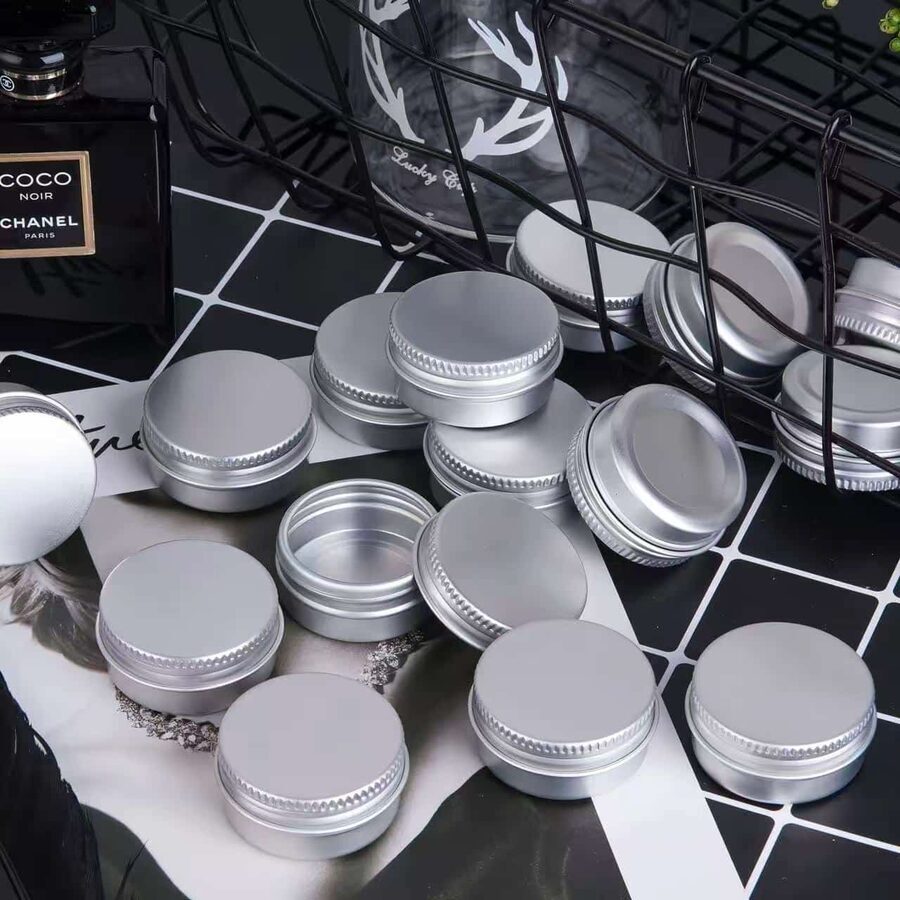
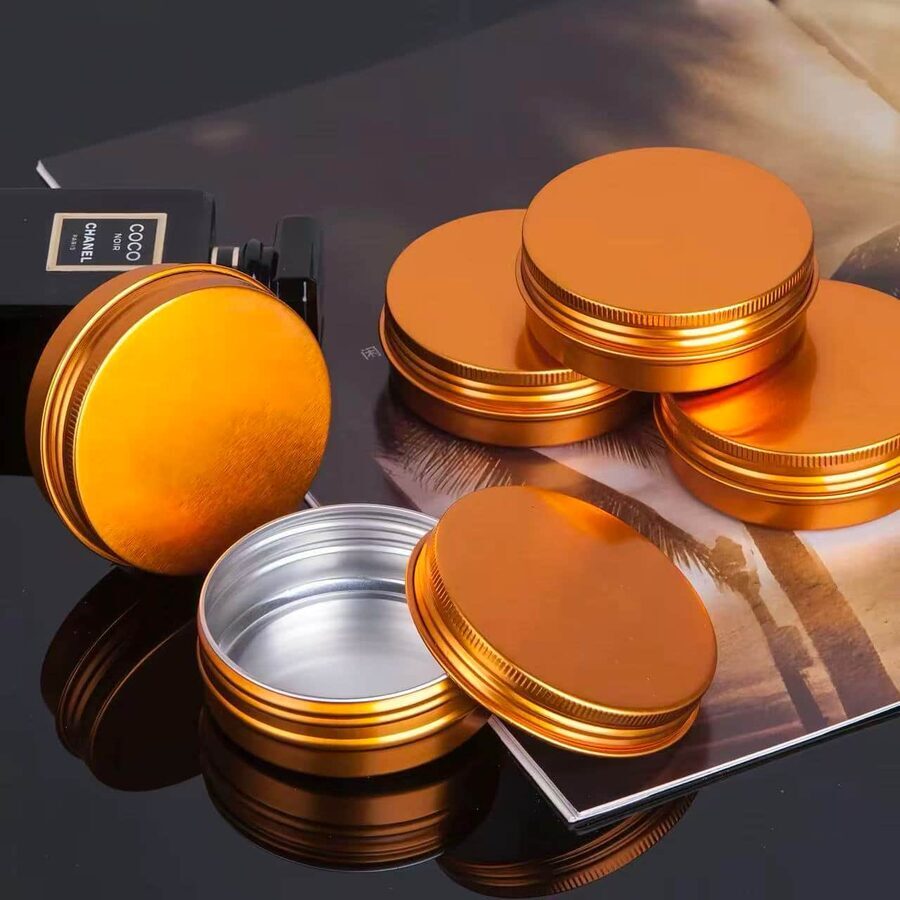
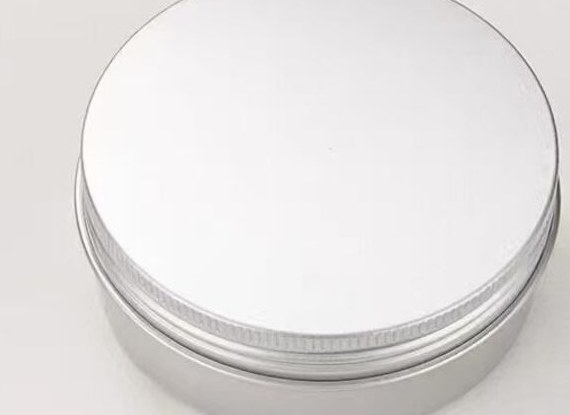
A screw-top round aluminum tin can is a seamless or seamed aluminum container with a matching threaded lid, typically used for lip balm, salve, solid perfume, candle samples, and cosmetic tin packaging. The lid and body share a cut thread — not a friction fit — so the closure stays tight through repeated opening. Buyers comparing aluminum tins wholesale need to check the thread, the wall, and the liner before placing a bulk order.
1. Ask for a thread-engagement sample, not a photo
A photo of a closed tin tells you nothing about how the thread engages. Ask the factory to send three pieces: one open, one closed, and one cut in half along the axis. On the cut sample, count the number of full thread turns that overlap between cap and body. For a small aluminum container that will be opened daily, 1.5 turns is a practical minimum; under 1 turn the cap can pop off in a bag. A bad result looks like a cap that seats with a single quarter-turn and feels loose when you wiggle it.
2. Measure the sidewall, not the rim
Wall thickness is the number that decides whether your aluminum tin survives a mailer. Measure at the sidewall with a micrometer, not at the rolled rim where the metal is thicker by design. For a 30–60 ml round jar, 0.30–0.45 mm is the common band; many factories run 0.35 mm. Below 0.28 mm the can dents under thumb pressure and will arrive out of round. Above 0.50 mm the weight climbs and the cap thread becomes harder to cut cleanly. Ask for the thickness in writing per size.
3. Confirm the liner chemistry against your formula
The liner is the thin coating or film inside the cap (and sometimes the body) that separates your product from bare aluminum. It is usually a food-grade epoxy, a polyester, or a PP film. This matters because lip balm tins and salve tins often carry acidic or solvent-based formulas that will attack an unlined or wrongly lined surface. Tell the factory the pH range, the oil phase, and any essential oils or fragrance. A bad result is a liner that blisters, discolors, or delaminates after two weeks of contact. If your formula is aggressive, ask about an unlined anodized body instead.
4. Check cap seating under load
Fill a sample tin with the actual product weight and drop it from 1.2 m onto a hard floor, cap down. Then do it again cap up. A screw-top aluminum tin can should stay closed and the cap should still thread on smoothly afterward. If the cap cross-threads or the body ovalizes, the wall is too thin or the thread was cut too shallow. This test takes two minutes and catches more problems than any spec sheet.
5. Verify the diameter and height against your label
Aluminum tins are sold by outer diameter (OD) and height, not by milliliter capacity. A 50 mm OD × 20 mm tin does not hold 50 ml of balm once you allow headspace. Ask the factory for the usable fill volume at your target headspace, and confirm it with a fill trial. A bad result is a label designed for a 30 ml fill that only fits 24 ml of product, leaving a visible air gap at the rim.
| Nominal size | Typical OD | Typical fill | Common use |
|---|---|---|---|
| 15 ml | 38 mm | 12–14 ml | Lip balm, solid perfume |
| 30 ml | 50 mm | 26–28 ml | Salve, sample cosmetic |
| 60 ml | 65 mm | 54–58 ml | Candle tin, body butter |
| 120 ml | 80 mm | 110–116 ml | Candle, bulk cosmetic |
6. Decide whether you need a custom aluminum tin or a stock size
A custom aluminum tin requires new tooling for the body and cap. Once that tooling is cut, the diameter, height, and thread pitch are fixed — you cannot change them without paying again. If your brand is still testing the market, start with a stock size and a printed label. Move to a custom aluminum tin only when your fill volume and label artwork are locked. Ask the factory which of their existing sizes are closest to your target before you commit to tooling.
7. Inspect bulk metal tins before the carton closes
When your bulk metal tins arrive, do not sign off on the pallet. Pull 20 pieces at random from different cartons and check four things: thread burrs (run a finger around the cap thread — it should be smooth), cap wobble (screw on and press sideways — no more than 0.5 mm movement), liner adhesion (try to lift an edge with a fingernail — it should not peel), and roundness (place on a flat surface — no rocking). A bad result is a batch where one carton is fine and the next has burrs, which usually means a worn cutting die. Report it before the carton is sealed.
8. Ask what the factory cannot change after tooling
This is the question most buyers forget. Once the die is cut, the outside diameter, the thread pitch, the cap height, and the liner pocket depth are locked. The factory can still change the alloy temper, the anodize color, the liner material, and the surface finish. Ask explicitly: "Which of my specs are fixed by tooling, and which can be adjusted on the next run?" A supplier who cannot answer this clearly is a risk on a custom aluminum tin order.
9. Match the closure to the product, not the catalog
Screw-top aluminum tins are not the right closure for every product. A very thin liquid will wick through the thread unless you add a gasket or an induction seal. A hot-poured candle wax needs a lid that tolerates 60–70 °C without the liner softening. A solid balm is the easiest case. If your product is outside the balm-and-salve range, say so early and ask the factory to recommend a closure, not just a size.
10. Get the dimensional report in writing
Before you pay for tooling or a bulk run, ask for a one-page dimensional report: OD, height, wall thickness, thread pitch, thread depth, liner material, liner thickness, and alloy grade. This is the document you will use to reject a bad shipment. A supplier who will not put numbers on paper is telling you something. If you have a drawing or a filled sample, send it over and ask for a matching quote with the dimensional report attached.
Frequently asked questions
What is the difference between a screw-top aluminum tin and a slip-lid tin?
A screw-top aluminum tin has a cut thread on the body and cap, so the lid locks with a turning motion and stays closed under vibration. A slip-lid tin relies on friction between a straight wall and a slightly larger lid, which is cheaper to make but can pop off in a bag. For lip balm tins and salve tins that travel, screw-top is the safer choice.
Can I put acidic lip balm or essential oils in an aluminum tin?
Yes, but only with the right liner. Bare aluminum reacts with acidic and high-fragrance formulas, causing discoloration and off-notes. Ask for a food-grade epoxy or PP liner and tell the factory the pH and oil phase of your formula. If your formula is very aggressive, consider an anodized body with no liner.
How do I know what fill volume my aluminum tin actually holds?
Aluminum tins are sold by outer diameter and height, not by milliliter capacity. The usable fill volume is smaller once you allow headspace for the cap. Ask the factory for the fill volume at your target headspace, then confirm it with a physical fill trial using your actual product.
What wall thickness should I specify for a 30 ml aluminum jar?
For a 30 ml round jar, 0.30–0.45 mm sidewall is the common range, with 0.35 mm being typical. Below 0.28 mm the can dents in transit; above 0.50 mm the weight and thread-cutting difficulty rise. Always specify the measurement point — sidewall, not rim.
What should I check on a bulk metal tin shipment?
Pull 20 pieces from different cartons and check thread burrs, cap wobble, liner adhesion, and roundness. Run a finger around the cap thread, press the closed cap sideways to feel for movement, try to lift the liner edge with a fingernail, and place the tin on a flat surface to check for rocking. Report any defect before the carton is sealed.