Sample Inspection for Aluminum Tins: What to Check
When you receive an aluminum packaging sample, check dimensions, wall thickness, seal integrity, decoration, and material grade against your specification. Measure with calipers, test the closure, inspect the print under magnification, and verify the alloy and temper. Document every deviation and request a revised sample before approving bulk production.
Why does the sample matter more than the spec sheet?
A spec sheet tells you what the factory intends to make; the sample tells you what they actually made. On the production floor, small variations in tooling wear, alloy temper, and operator setup can shift dimensions by a few tenths of a millimeter. If you approve a sample without measuring, you are accepting whatever arrives in bulk. The sample is your only chance to catch a problem before thousands of units are stamped.
What should you measure first on an aluminum tin sample?
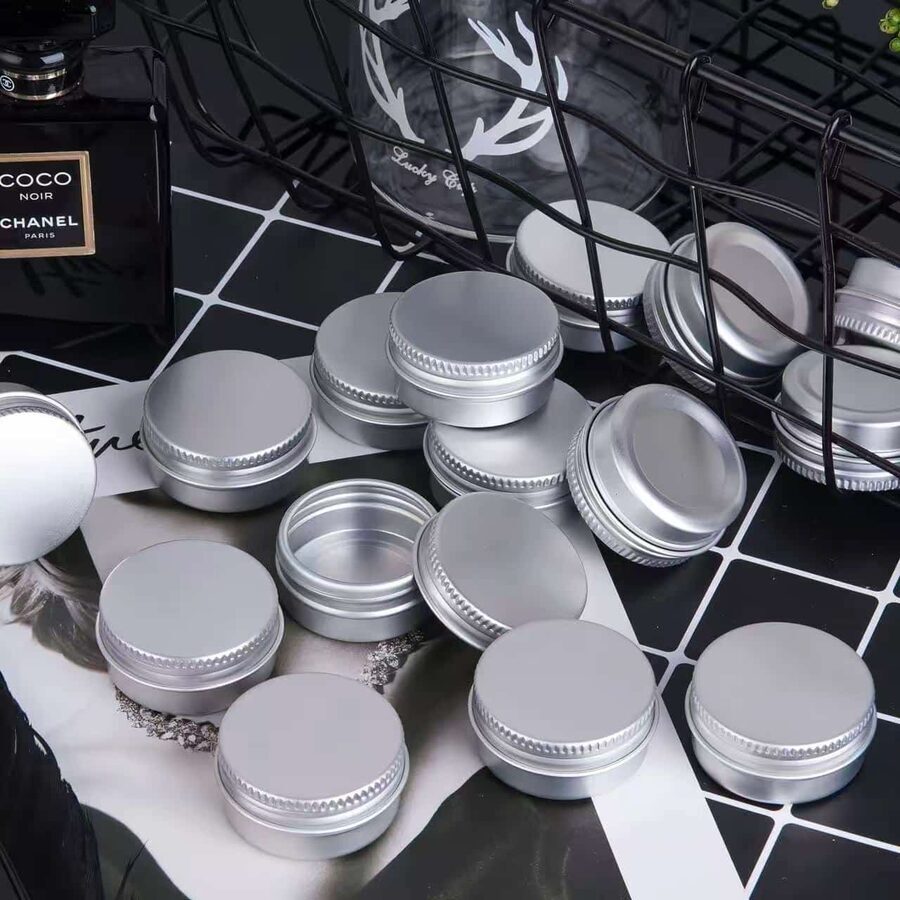
Start with the basics: outer diameter, overall height, and wall thickness. Use a digital caliper and measure at three points around the circumference and at the top, middle, and bottom of the wall. For a small aluminum container like a lip balm tin, the diameter might be 45mm with a tolerance of ±0.2mm. Wall thickness for aluminum tins typically ranges from 0.3mm to 0.5mm; if it is thinner, the tin may dent easily. Also measure the lid's inner diameter and the tin's outer diameter to check the fit. A slip lid should have a interference fit of about 0.1mm to 0.2mm, while a screw lid needs proper thread engagement. Record all measurements and compare them to your drawing.
How do you test the seal on a metal tin container?
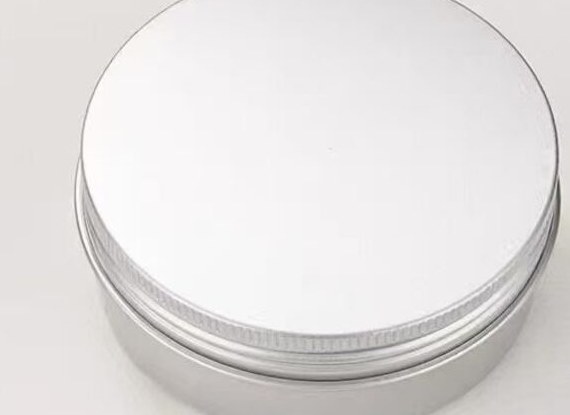
The seal is what protects your product. For a slip-lid tin, fill it with your product or a simulant (e.g., water for leak tests) and close the lid. Invert the tin and place it on a paper towel for 24 hours. Any moisture ring indicates a poor seal. For screw-top tins, check that the lid threads engage smoothly and that the lid seats fully without cross-threading. A metal screw lid for jars should require about 1.5 to 2.5 turns to open. If the lid is too loose, it may pop off in transit; too tight, and customers struggle to open it. Also inspect the lid's inner coating or gasket if present; a gasket can improve seal integrity for liquids.
What decoration checks are critical for cosmetic tin packaging?
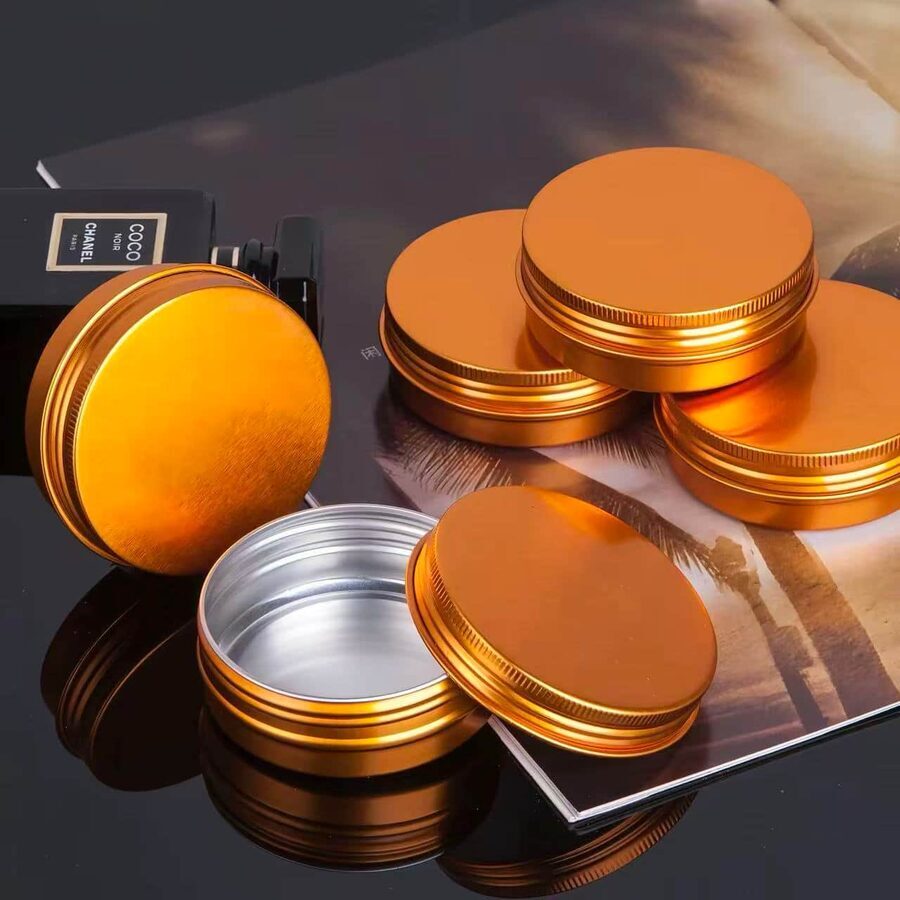
Decoration is where samples often fail. Check color accuracy against your Pantone reference under D50 lighting. For silkscreen or offset printing, examine registration—the alignment of different colors. Misregistration of more than 0.2mm is visible. Use a 10x loupe to inspect for pinholes, smudges, or incomplete coverage. Perform a tape test: apply 3M 610 tape over the print, press firmly, and pull at a 90-degree angle. If ink lifts, adhesion is poor. For labels, check that the label is centered and free of bubbles. If your custom aluminum tin has a matte or glossy finish, ensure it is consistent across the sample.
How do you verify the material grade and temper?
Ask your supplier for a mill certificate that states the alloy and temper. Common alloys for aluminum tins are 3003, 8011, and 1100. 3003 offers good corrosion resistance and formability; 8011 is often used for lids. Temper indicates hardness: H14 is half-hard, H16 is three-quarter hard. If you cannot get a certificate, a simple hardness test with a pencil eraser can give a rough idea, but it is not definitive. For critical applications, send a sample to a lab for composition analysis. Also check for surface defects: scratches, dents, or oxidation (white rust). A small aluminum container should have a uniform surface free of tool marks.
What about the fit of an aluminum cap for glass bottle or jar?
If your sample includes an aluminum cap for glass bottle or an aluminum bottle cap, test the fit on your actual glass container. The cap should screw on smoothly and seat without wobbling. Measure the cap's inner diameter and the bottle's neck finish. A mismatch of more than 0.3mm can cause leaks. Check the cap's liner—if it is a foam or pulp liner, ensure it is properly seated and not loose. For metal screw lid for jars, test the torque required to seal; typically 15-20 inch-pounds for a 38mm cap. If the cap is too tight, it may crack the glass; too loose, and it will leak.
How do you document and approve a sample?
Create a sample approval report that lists every measurement, test result, and observation. Include photos of defects. Sign and date the report, and keep a physical sample as the golden sample. If the sample fails any critical parameter, request a revised sample. Do not accept verbal assurances that bulk will be better. Once approved, the golden sample becomes the reference for incoming inspection. For aluminum tins wholesale orders, this process prevents costly rework and delays.
Comparison table: what to check on different aluminum packaging samples
| Check | Small aluminum container (e.g., lip balm tins) | Cosmetic tin packaging (e.g., salve tins) | Candle tins | Aluminum caps (e.g., aluminum cap for glass bottle) |
|---|---|---|---|---|
| Dimensions | Diameter, height, wall thickness (0.3-0.5mm) | Diameter, height, wall thickness, lid fit | Diameter, height, wall thickness, wick hole if any | Inner diameter, height, thread pitch |
| Seal type | Slip lid or screw lid | Screw lid often with gasket | Slip lid or screw lid | Screw thread, often with liner |
| Decoration options | Silkscreen, offset, labels | Silkscreen, offset, embossing | Silkscreen, offset, labels | Silkscreen, offset, anodizing |
| Typical tooling | Progressive die, press | Progressive die, press, threading tools | Progressive die, press | Injection mold for liner, threading tools |
| Where it fails | Dents, poor lid fit, ink adhesion | Thread cross-threading, gasket displacement | Warping, wick hole misalignment | Liner fall-out, thread mismatch |
Who should choose which sample inspection approach?
For small aluminum containers like lip balm tins, focus on dimensional accuracy and lid fit; these are high-volume items where a 0.1mm deviation can cause line stoppages. For cosmetic tin packaging such as salve tins, prioritize seal integrity and decoration quality because the product is often oily and the tin is a key branding element. For candle tins, check for heat resistance and wick hole alignment if applicable. For aluminum caps, test on your actual bottle and verify liner compatibility. If you are ordering bulk metal tins, always request a pre-production sample from the actual production line, not a hand-made prototype. If you are not equipped to perform all tests, ask your supplier for a third-party inspection report. Remember, the sample is your best insurance against a costly mistake. To get started, send us your drawing or request a sample kit.
Frequently asked questions
How many samples should I request for inspection?
Request at least three samples from different production runs or cavities to assess consistency. If the supplier provides only one, ask for more. Variation between samples can indicate tooling wear or process control issues.
What is the most common defect in aluminum tin samples?
Dimensional deviation, particularly in wall thickness and lid fit, is the most common. Decoration defects like color shift and poor adhesion are also frequent. Always measure and test rather than relying on visual inspection alone.
Can I use a simple go/no-go gauge for incoming inspection?
Yes, for high-volume orders, a go/no-go gauge is practical for checking critical dimensions like diameter and height. However, it does not replace a full dimensional layout for the first article. Work with your supplier to define critical dimensions.
How do I test the seal on a slip-lid tin without filling it with product?
Use water or a low-viscosity oil as a simulant. Fill the tin to 80% capacity, close the lid, invert it, and place it on a paper towel. Check for leaks after 24 hours. This test approximates the seal's performance with your product.
What should I do if the sample fails inspection?
Document the failure with photos and measurements, and send a detailed report to your supplier. Request a root cause analysis and a revised sample. Do not proceed to bulk production until the sample passes all critical checks.