Food-Grade Linings for Aluminum Tins: When You Need Them
You need a food-grade lining when your product is acidic, oily, aqueous, or contains alcohol, essential oils, or salts that contact bare aluminum. For dry, low-moisture goods, unlined aluminum is usually fine. Specify the lining type, thickness, cure, and migration limit in your RFQ, and confirm the supplier's food-contact certification.
What does a food-grade lining actually do?
A food-grade lining is a thin, inert polymer film applied to the inside surface of an aluminum tin to separate the metal from the product. It prevents direct contact between the aluminum and the contents, which matters because aluminum can react with acids, salts, and moisture. The lining is typically 3–10 µm dry film thickness, applied by spray or roller coating, then cured. It is not a barrier that makes a tin waterproof or airtight; it is a chemical barrier. The base metal still provides the structure and the seal.
When does your product need a lined aluminum tin?
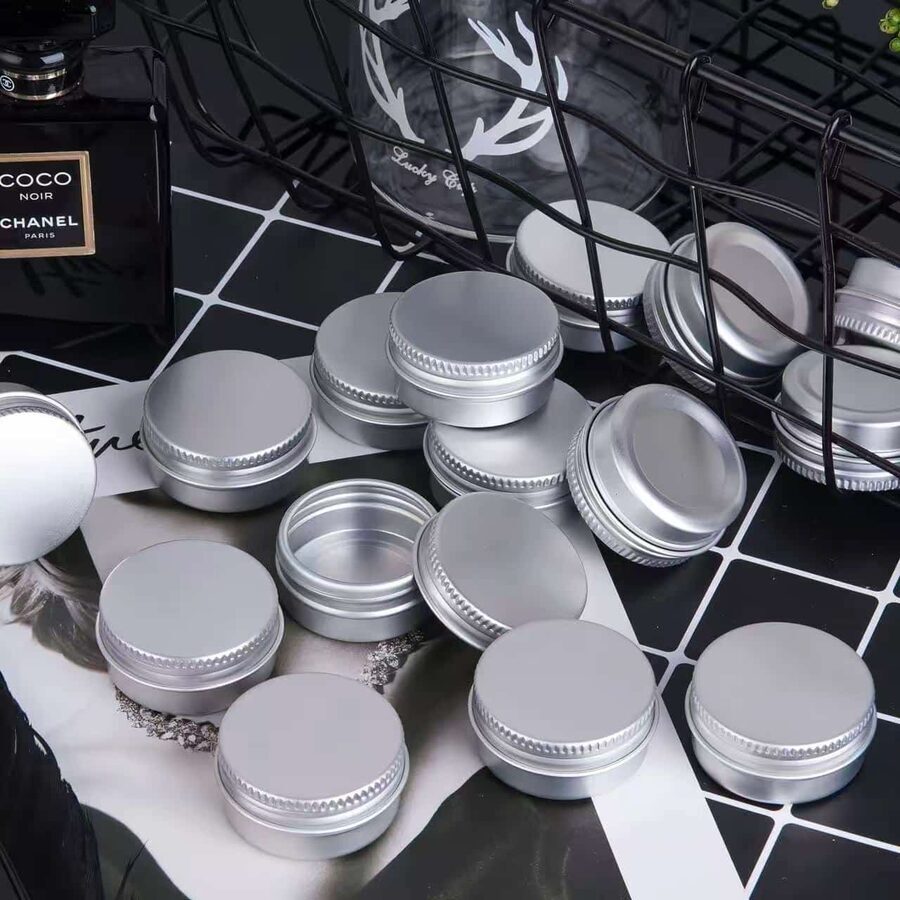
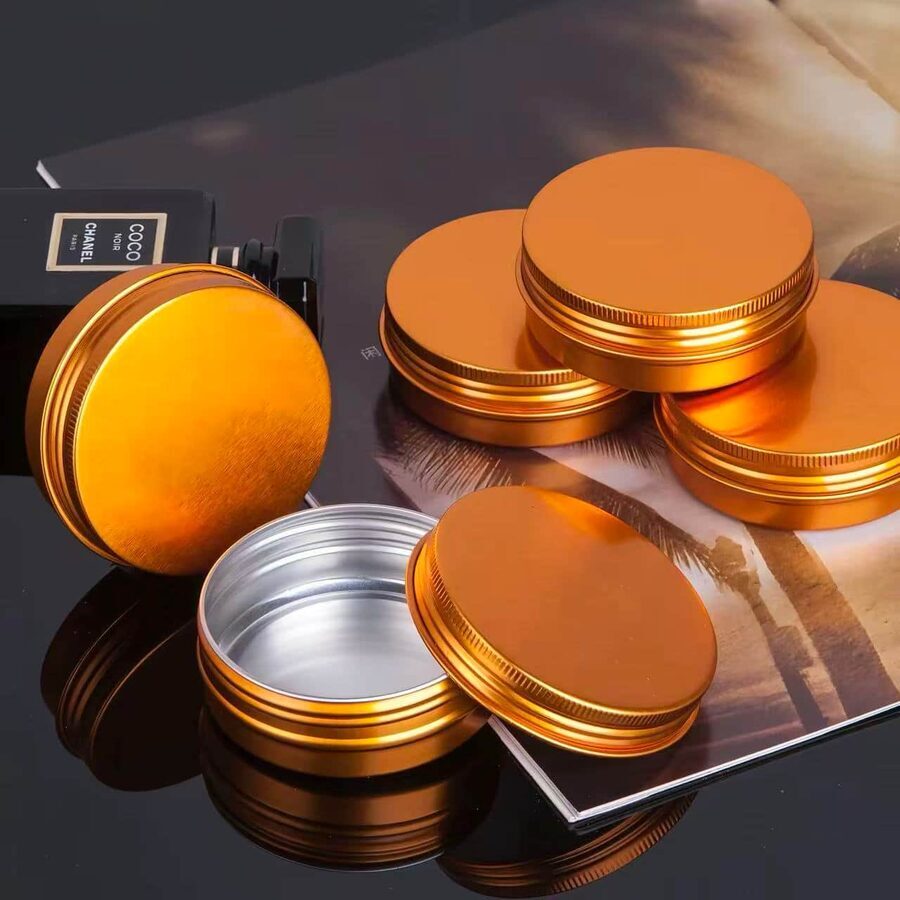
You need a lining when the product will contact the metal and has any of these characteristics: pH below 4.5 (acidic), water activity above 0.6 (moisture present), alcohol content above a few percent, essential oils or fragrance oils, or salt. Common examples include salve tins with citrus oils, cosmetic tin packaging for acidic serums, and small aluminum containers for salt scrubs. If your product is dry and non-corrosive—solid wax, dry tea leaves, or candle wax—an unlined aluminum tin is usually acceptable, provided the product does not touch the metal during normal use. For lip balm tins, the wax itself is a barrier, but if the balm contains flavor oils or vitamin C, a lining is safer.
Which lining types are used in aluminum tins?
Three lining chemistries dominate: epoxy-phenolic, polyester, and polyvinyl chloride (PVC) organosol. Each has trade-offs in chemical resistance, flexibility, and cure temperature. Epoxy-phenolic offers good acid resistance and is common for food cans; polyester is more flexible and suits tins that will be seamed or flexed; PVC organosol gives a thicker, more cushioning film but is less heat-stable. Your supplier may offer only one or two. Ask for the lining chemistry by name and request a technical data sheet. Note that the lining must be compatible with the product and the cure must be complete; an under-cured lining can leach monomers or fail adhesion.
What numbers should go into your RFQ for a lined aluminum tin?
Put these specifications in writing: lining chemistry (e.g., epoxy-phenolic), dry film thickness range (e.g., 5–8 µm), cure schedule (temperature and time), migration limit (e.g., "no visible migration" or a specific overall migration limit in mg/dm²), and food-contact compliance (e.g., FDA 21 CFR 175.300 for epoxy, or EU 10/2011). Also state the product's pH, water activity, and alcohol content so the supplier can recommend a lining. If you need a custom aluminum tin, provide a drawing with the lining callout. For bulk metal tins, ask for a certificate of analysis per batch. Do not accept "food-grade" as a standalone claim; ask for the specific regulation and test report.
Does adding a lining require new tooling?
No. The lining is a coating applied after the tin is formed, so the tooling for the tin body and lid is unchanged. If you have an existing unlined aluminum tin and want to add a lining, you do not need to cut new tools. However, the lining process may require masking of the rim or threads if the tin has a screw lid, because coating on the sealing surface can affect closure. For a metal screw lid for jars or an aluminum cap for glass bottle, the lining is usually applied only to the interior of the cap, not the threads. Confirm with your supplier whether masking is needed and whether it changes the minimum order quantity for lining runs.
How do you verify the lining on incoming tins?
Check three things: film thickness (use a magnetic thickness gauge or cross-section), adhesion (cross-hatch test per ASTM D3359), and continuity (electrolytic test or visual inspection for pinholes). Also run a compatibility test: fill a sample tin with your product, store at 40°C for four weeks, and inspect for blistering, softening, or discoloration. For cosmetic tin packaging and salve tins, include a sensory check for odor or taste transfer. If you order aluminum tins wholesale, ask for a retained sample from each lining batch. Remember that lining thickness varies by factory; typical ranges are 3–10 µm, but confirm the exact range in writing.
What are the common failure modes of tin linings?
Adhesion loss at the rim or seam, pinholes from incomplete coverage, under-cure leading to soft film or odor, and chemical attack from a product that was not tested. A lining that fails adhesion can peel into the product, which is a visible defect. Pinholes allow localized corrosion, which shows as dark spots or pitting. Under-cure can cause the lining to smell of solvent or monomer. All of these are preventable by specifying the cure schedule and running a compatibility test before production. If your product is a candle, note that fragrance oils can soften some linings; test with the actual fragrance load.
When can you skip the lining?
Skip the lining when the product is dry, non-acidic, and non-oily, and when the metal will not be in prolonged contact with moisture. Examples: dry tea in a small aluminum container, solid wax melts, or candle tins where the wax pool does not reach the metal. For aluminum bottle caps and aluminum caps wholesale, linings are often omitted if the cap is for a dry product or if a separate liner (e.g., a foam or pulp liner) provides the seal. However, for any product with a water phase, a lining is the safer choice. If you are unsure, ask your supplier for a compatibility recommendation based on your formula.
How does lining affect cost and lead time?
Lining adds a process step, so it increases unit cost compared with an unlined tin. The increase depends on the lining chemistry, thickness, and whether masking is required. Lead time also extends because lining runs are often batched. Many factories quote lining as a separate line item. Ask for the lining cost per unit and the minimum lining run quantity. Do not assume that a lined tin is automatically food-grade; the lining must be certified for food contact. For custom aluminum bottle caps, lining may be applied in-house or outsourced; confirm which, as it affects traceability.
If you have a drawing or a sample, send it over and we will confirm the lining specification that fits your product.
Frequently asked questions
Is an unlined aluminum tin safe for dry tea?
Yes, unlined aluminum is generally acceptable for dry tea because the product is low-moisture and non-acidic. However, if the tea contains added flavor oils or citrus peel, a lining is recommended. Always confirm with your supplier and run a storage test.
Can I add a lining to an existing unlined tin without new tooling?
Yes, adding a lining does not require new tooling because the lining is a coating applied after forming. The tin body and lid tools remain the same. You may need to adjust masking for threads or rims, which is a process change, not a tooling change.
What food-contact certification should I ask for?
Ask for the specific regulation the lining complies with, such as FDA 21 CFR 175.300 for epoxy linings or EU 10/2011 for plastics. Request a certificate of analysis or a migration test report for the lining batch. Do not accept a general "food-grade" statement without documentation.
How thick is a typical food-grade lining?
Typical dry film thickness is 3–10 µm, but this varies by lining chemistry and factory. Epoxy-phenolic linings are often 5–8 µm, while PVC organosol may be thicker. Specify the range in your RFQ and confirm with your supplier.
Do lined tins cost more than unlined tins?
Yes, lining adds a process step and typically increases unit cost. The increase depends on the lining type, thickness, and whether masking is needed. Ask for the lining cost as a separate line item and confirm the minimum lining run quantity.