Choosing the Right Aluminum Tin Size for Lip Balm & Solid Perfume
For lip balm and solid perfume, the right aluminum tin size is determined by your fill volume, product consistency, and filling method: 5g suits sample or single-use, 10g is the standard for lip balm, 15g fits larger balms or solid perfume, and 30g works for multi-purpose salves. Match the tin's internal volume to your fill weight, considering headspace for easy closing and applicator access.
What sizes are available for lip balm and solid perfume tins?
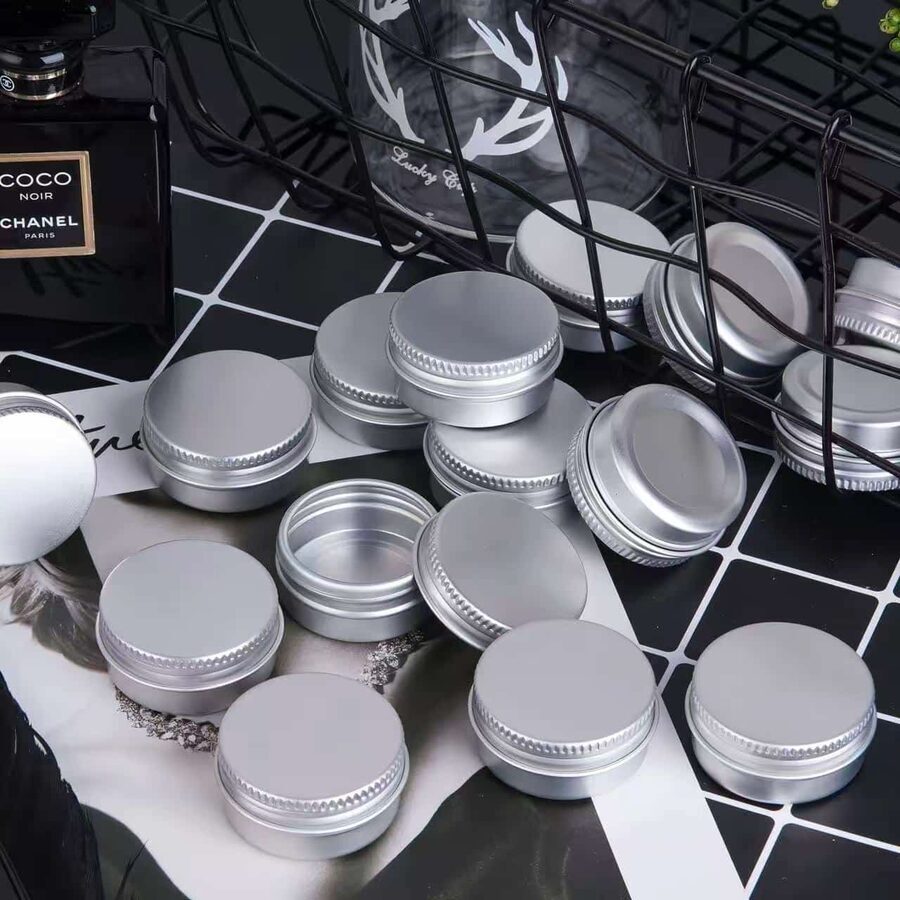
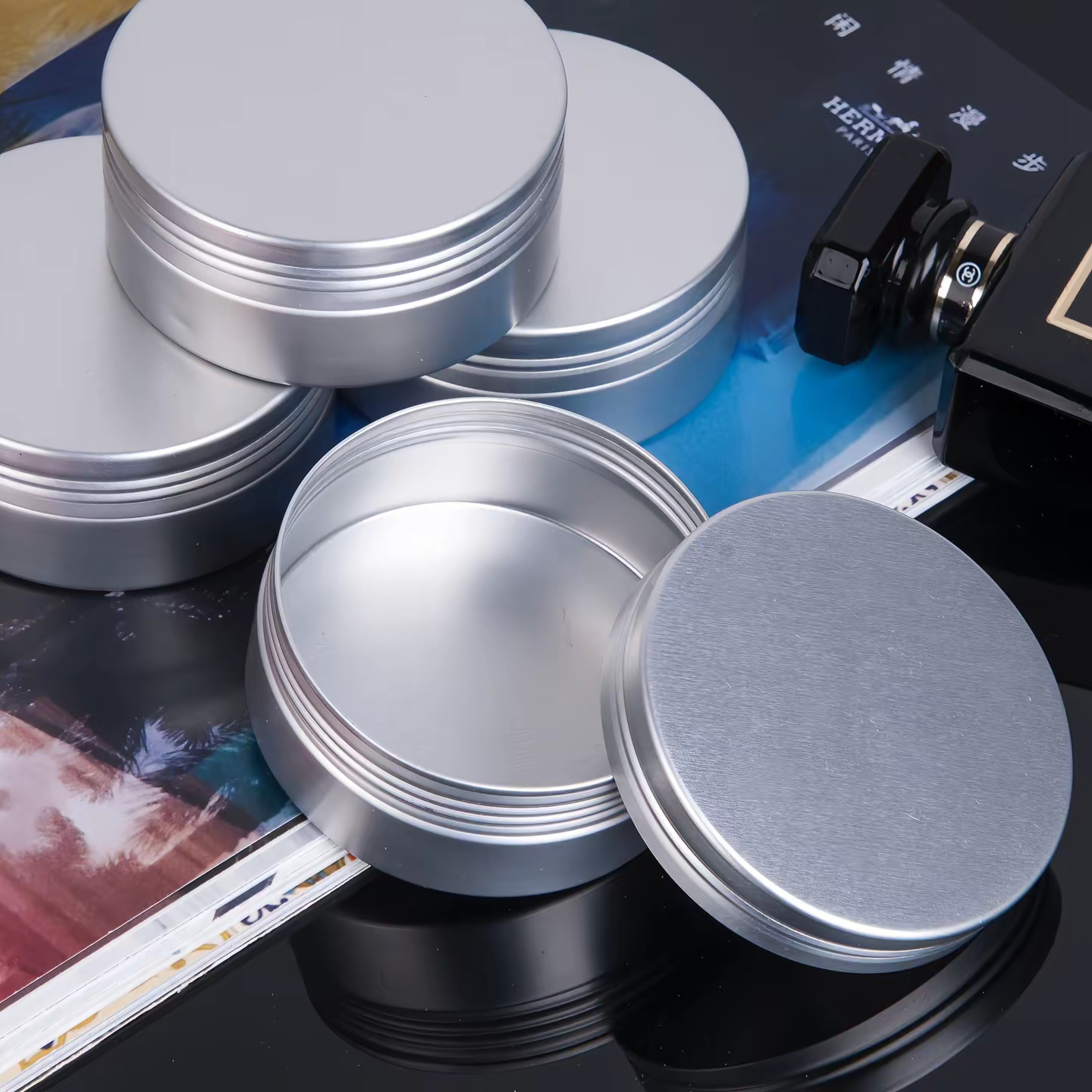
Aluminum tins for cosmetics typically come in 5g, 10g, 15g, and 30g nominal capacities. These correspond to approximate internal volumes of 6ml, 12ml, 18ml, and 35ml, respectively. The most common size for lip balm is 10g, with an internal diameter of 50mm and a depth of 10mm. Solid perfume often uses 10g or 15g tins, depending on whether the product is a balm or a more solid formulation. Some suppliers offer custom dimensions, but tooling costs apply.
How do you match tin size to your product fill weight?
The key is to match the tin's internal volume to the weight of your product, accounting for density. For a balm that is a blend of oils and butters, density is typically around 0.9g/ml. So a 10g fill requires about 11ml of space. Always leave headspace—about 10% of the tin's volume—to allow for the lid to close without product overflow and to accommodate a finger or applicator. For a 10g tin (12ml volume), fill to about 9-10g of product. If you fill too full, the lid will push product out, creating a mess and potential contamination.
What are the standard dimensions for common lip balm tins?
While dimensions vary by manufacturer, typical sizes are:
- 5g tin: diameter ~38mm, depth ~8mm, internal volume ~7ml.
- 10g tin: diameter ~50mm, depth ~10mm, internal volume ~12ml.
- 15g tin: diameter ~58mm, depth ~12mm, internal volume ~18ml.
- 30g tin: diameter ~75mm, depth ~15mm, internal volume ~35ml.
These are approximate; always request a spec sheet from your supplier. The wall thickness affects internal volume—a 0.30mm wall reduces volume slightly compared to a 0.20mm wall.
How does the filling method affect your tin size choice?
If you fill manually with a spatula or syringe, you have more flexibility with tin depth and opening. For automatic filling lines, the tin's opening diameter must be consistent and the rim smooth to avoid jams. A wider opening (e.g., 50mm) is easier for automatic filling and for consumers to access. If you plan to use a piston filler, the tin's depth must match the fill head stroke. Also consider whether you need a tamper-evident seal—some tins have a recessed inner rim for a foil seal, which adds depth.
What about the lid type: screw top vs. slip lid?
For cosmetic tins, two lid styles are common: slip lid (friction fit) and screw top. Slip lids are easier to open and close, which is good for lip balm and solid perfume—users often open with one hand. Screw tops provide a more secure seal but are less common for small tins and may be harder to open for some users. For products with high oil content, a slip lid with a snug fit is sufficient. If you need an airtight seal for longer shelf life, consider a tin with a liner or an inner seal.
How do decoration and customization affect tin size?
Your choice of decoration—printed label, embossing, or full-color printing—may require a certain tin size to be cost-effective. Printing on the lid and base is standard. Embossing (debossing) adds a premium feel but requires a deeper metal thickness (0.25mm or more) to avoid distortion. If you plan to print a detailed design, a larger tin (15g or 30g) gives more surface area. However, keep in mind that custom printing has setup costs; for smaller quantities, consider a standard size with a label.
What are the typical tooling costs and MOQs for aluminum tins?
Custom sizes and shapes require tooling, with costs typically ranging from $500 to $2,000 per tool, depending on complexity. Minimum order quantities (MOQs) for custom aluminum tins are often 5,000 to 10,000 units, but some suppliers offer lower MOQs for stock sizes. If you choose a standard size, you can avoid tooling costs and order smaller quantities. Always ask your supplier for a detailed quote including tooling, unit price, and lead time.
Comparison Table: Common Sizes for Lip Balm & Solid Perfume
| Feature | 5g Tin | 10g Tin | 15g Tin | 30g Tin |
|---|---|---|---|---|
| Typical Use | Samples, single-use | Standard lip balm | Solid perfume, larger balm | Multi-purpose salve |
| Internal Volume (approx.) | 7ml | 12ml | 18ml | 35ml |
| Diameter (approx.) | 38mm | 50mm | 58mm | 75mm |
| Depth (approx.) | 8mm | 10mm | 12mm | 15mm |
| Seal Type | Slip lid | Slip lid | Slip lid or screw top | Screw top or slip lid |
| Decoration Options | Label, print | Print, emboss | Print, emboss, deboss | Print, emboss, deboss |
| Tooling Cost (custom) | Low | Medium | Medium | High |
| Where It Fails | Too small for full-size product | Limited for thick balms | May be too large for lip balm | Bulky for purse |
What are the pitfalls to avoid when selecting tin size?
One common mistake is ignoring the product's density. If your balm is whipped or aerated, it takes up more volume than the same weight of a dense balm. Test your product in the tin before ordering. Another pitfall is not accounting for the applicator—if you use a wooden stick or a spatula, the tin must be deep enough. Also, consider the user experience: a 30g tin may be too large for a lip balm, making it awkward to apply. Finally, check the tin's wall thickness—too thin (0.15mm) can dent easily, while too thick (0.30mm) reduces internal volume and increases cost.
How do you ensure quality and consistency with your chosen size?
Once you choose a size, request pre-production samples and test them with your product. Check the fit of the lid—it should close snugly but not be difficult to open. Measure the internal volume and compare to your fill weight. Also, test the tin's resistance to corrosion if your product contains essential oils, which can react with certain metals. A good supplier will provide a certificate of compliance for food-grade or cosmetic-grade aluminum.
If you have a drawing or sample, send it to a few aluminum tin manufacturers for a quote.
Frequently asked questions
What is the standard size for a lip balm tin?
The most common size is 10g, with an internal diameter of about 50mm and a depth of 10mm. This holds approximately 12ml, which is enough for a typical lip balm. Some brands use 5g for samples or 15g for a larger product.
How much product fits in a 10g tin?
A 10g tin typically has an internal volume of 12ml. For a balm with a density similar to water (1g/ml), you can fill about 10-11g, leaving headspace. For denser products, you might fit more weight, but always test your specific formulation.
Can I get custom sizes for aluminum tins?
Yes, many manufacturers offer custom dimensions, but this requires tooling, which costs between $500 and $2,000 per tool. Custom sizes also have higher MOQs, typically starting at 5,000-10,000 units. If you need a small quantity, consider a standard size.
What is the difference between a slip lid and a screw top tin?
A slip lid is a friction-fit lid that is easy to remove and replace, ideal for lip balm and solid perfume. A screw top provides a more secure closure and is often used for larger tins or products that need an airtight seal. Screw tops may be harder to open for some users.
How do I avoid leakage with liquid balms?
For liquid balms, choose a tin with a tight-fitting lid, possibly with a liner or an inner seal. Ensure you leave headspace to allow for expansion. Also, test the tin's seal by filling it and turning it upside down for a few minutes. If leakage occurs, consider a screw top with a gasket.